
Walking through an open-air museum: Schaerbeek's streets named after artists
You may live on rue Gallait, catch the tram at Vinçotte or meet friends on place Verboekhoven without knowing who these people were. In Schaerbeek, the street map reads like the catalogue of a museum of 19th-century Belgian art. This guide takes you through 53 streets and squares named after painters, sculptors and architects, neighbourhood by neighbourhood, so you can walk it.
How a village became the "artists' suburb"
Around 1800, Schaerbeek was a farming village of about 1,100 people, known for its sour cherries and the donkeys that carried them to the Brussels markets. Then the city came. The rue Royale was extended towards today's place de la Reine from 1828, the Gare du Nord opened in the 1840s, and a whole grid of new streets grew around it. By 1899, the commune counted more than 64,000 inhabitants.
Artists followed the building sites. Land was cheaper than in Brussels, the new neighbourhoods were pleasant, and the new bourgeoisie bought paintings. The commune's website describes the period with a nickname: the "faubourg des artistes", the artists' suburb. Painters such as Eugène Verboeckhoven, Louis Gallait and Alfred Verwée lived and worked here. The official sculptor of the young Belgian state, Guillaume Geefs, even became mayor of Schaerbeek (1852 to 1861).
When the town hall opened on place Colignon in 1887, the commune created its own art collection "to bring beauty within reach of the people". Its fine arts commission was made up of local artists, several of whom now have a street in this guide. Today the collection holds more than 1,700 works.
The new streets needed names, and the commune chose its own artists. A first wave, around place Colignon and the Cage aux Ours, honours great Flemish masters and leading 19th-century painters. Later, in the Josaphat, Helmet, Meiser and Diamant neighbourhoods drawn up by the communal engineer Octave Houssa from 1896, the names are often those of artists who had lived in Schaerbeek. According to the commune, about a quarter of all its streets carry the name of an artist.
About the museums. For each artist, we tell you when works are in the collection of the Royal Museums of Fine Arts of Belgium in Brussels, our national art museum. Not every work is on display at all times, so check before your visit.
1. Around Place Colignon and the Cage aux Ours
Rue Gallait. Louis Gallait (1810 to 1887) was born in Tournai on a street called rue aux Rats. It was later renamed after him. His huge history painting The Abdication of Charles V made him famous across Europe in 1841. He died in Schaerbeek. The Royal Museums of Fine Arts hold dozens of his works, including a version of The Abdication and The Plague of Tournai.

Rue Rubens. Peter Paul Rubens (1577 to 1640) hardly needs an introduction. Helped by a busy workshop, the Antwerp master produced around 1,400 paintings, and he also worked as a diplomat. The Royal Museums of Fine Arts own an important group of his works, from oil sketches such as The Fall of Icarus to large altarpieces.

Rue Verhas. Jan Verhas (1834 to 1896) painted children of the Belgian bourgeoisie with a sharp eye. His Parade of the Schools in 1878, showing pupils marching in front of King Leopold II, is in the Royal Museums of Fine Arts. Verhas died at home in Schaerbeek, on rue Seutin.

Rue Floris. Frans Floris (around 1519 to 1570) was an Antwerp painter who travelled to Rome to study Michelangelo and Raphael. His contemporaries nicknamed him "the Flemish Raphael". Before painting, he trained as a sculptor in his uncle's workshop. The Royal Museums of Fine Arts own several of his works, including a Last Judgement triptych.

Rue Quinaux. Joseph Quinaux (1822 to 1895), from Namur, painted outdoors in front of his subject at a time when many still worked from memory in the studio. In 1875, the Belgian State bought his Ford on the Lesse for the national museum, where it still is. He lived on avenue Rogier and died in Schaerbeek.

Rue Metsys. Quentin Metsys (also spelt Massys, around 1466 to 1530) was a leading painter of Renaissance Antwerp and a friend of Erasmus and Thomas More. A popular legend says he started out as a blacksmith and became a painter for love. His Saint Anne Altarpiece, painted for a Leuven brotherhood in 1509, is in the Royal Museums of Fine Arts.

Rue Fraikin. Charles-Auguste Fraikin (1817 to 1893) lost his father in a stagecoach accident at 15 and had to make his own way. He was elected to the Royal Academy at just 29 and later became curator of sculpture at the Brussels fine arts museum. He lived on chaussée de Haecht. His Captive Love is in the Royal Museums of Fine Arts.

Rue Van Oost. Jacob van Oost the Elder (1603 to 1671) trained in Rome and became the official painter of the city of Bruges. His sober, light-and-shadow style shows the influence of Caravaggio. His Music Party belongs to the Royal Museums of Fine Arts.

Place Eugène Verboekhoven. Eugène Verboeckhoven (1798 to 1881) was a painter, sculptor and engraver famous for his sheep, cattle and donkeys. In 1830, he took up arms in the Belgian Revolution. He died in Schaerbeek, where he had his family home and studios. The Royal Museums of Fine Arts hold a dozen of his works, including the patriotic Belgian Lion Breaking its Chains.

Closer to home, Verboeckhoven's painting Les ânes schaerbeekois (The Schaerbeek Donkeys), showing two donkeys, hangs in the mayor's office at the town hall. Schaerbeek is, after all, the "cité des Ânes". Some local wits claim the office actually counts three donkeys.

Look closely at the street sign: the square and the STIB stop are both spelt "Verboekhoven", without the "c". That official spelling is in fact a historic spelling mistake: the painter's family name is Verboeckhoven.
And why "Cage aux Ours"? The nickname dates from a row in the communal council in 1878. Mayor Guillaume Kennis (independent Catholic) had drawn up the plans to extend rue Royale Sainte-Marie beyond the railway, with a green space decorated with large stones imitating rocks. Henri Bergé, a liberal alderman, criticised the rocks and railings and compared the site to the bear pit of the Bern zoo, which he had just visited. The name stuck and is still used today.
Rue François-Joseph Navez. François-Joseph Navez (1787 to 1869) studied in Paris with Jacques-Louis David and met Ingres in Rome. Back in Brussels, his studio trained a generation of painters, including Jean-François Portaels, who also married his daughter. His Portrait of the de Hemptinne Family is in the Royal Museums of Fine Arts.

Rue Portaels. Jean-François Portaels (1818 to 1895) won the Prix de Rome in 1842 and travelled to the Middle East and the Balkans. His free studio trained dozens of artists, three of whom also have a street in Schaerbeek: Léon Frédéric, Josse Impens and Antoine Van Hammée. He died in Schaerbeek and had an official funeral at the Église royale Sainte-Marie. The Royal Museums of Fine Arts hold over 40 of his works.

Rue Capronnier. Jean-Baptiste Capronnier (1814 to 1891) was a stained-glass painter. His father, a porcelain painter from the Sèvres manufactory near Paris, settled in Schaerbeek in 1820 and rediscovered old glass-painting techniques. The son built a large workshop in Schaerbeek and made windows for churches across Belgium, from Tongeren to Turnhout. His glass even crossed the Channel: several English village churches, such as St Peter's in Chailey, Sussex, have Capronnier windows.

Rue Joseph Jacquet. Joseph Jaquet (1822 to 1898, note the spelling without "c") was a sculptor from Antwerp who trained in Guillaume Geefs's studio. He later taught the young Thomas Vinçotte. He made the bust of Schaerbeek mayor Achille Colignon and sat on the commune's fine arts commission. His Golden Age and a portrait of King Leopold I are in the Royal Museums of Fine Arts.

Rue Verwée. Alfred Verwée (1838 to 1895) was among the first Belgian painters to paint animals and landscapes in the open air. He won a gold medal in 1863 for Flemish Team. Less known: in 1891, he co-founded "Knokke-Attractions", a company to promote tourism on the coast. He died in Schaerbeek. Twelve of his works, including The Mouth of the Scheldt, are in the Royal Museums of Fine Arts. At the corner of his street and place Colignon, on the facade of the former Verwée house (place Colignon 12), you can see the monument to the painter, made by sculptor Charles Van der Stappen and installed in 1903.

Place Lehon. Henri Lehon (1809 to 1872) led several lives at once: marine painter, geologist, physicist, army officer and drawing teacher. He lived in Schaerbeek in 1836 and again from 1839 to 1852. His square sits just behind the Saint-Servais church.

Rue Teniers. David Teniers the Younger (1610 to 1690) was a master of tavern scenes and village fairs. He married Anne, daughter of Jan Brueghel the Elder, and became court painter to Archduke Leopold Wilhelm in Brussels. The Royal Museums of Fine Arts own his painting of Archduke Leopold Wilhelm in his Gallery, a picture full of pictures. According to local history, it was the sculptor-mayor Guillaume Geefs who proposed this street name.

Rue Van Ysendyck. Jules-Jacques Van Ysendyck (1836 to 1901) was the architect of Schaerbeek's town hall on place Colignon (1884 to 1889). He also designed the town halls of Anderlecht and Jette, inspired by the old town halls of Brussels, Leuven and Oudenaarde. After the 1911 fire, his son Maurice rebuilt the Schaerbeek town hall.

Rue Kessels. Mathieu Kessels (1784 to 1836) was born in Maastricht, worked in Saint Petersburg, Paris and Brussels, and died in Rome. The Royal Museums of Fine Arts hold about 75 of his sculptures. A bronze copy of his Discobolus stands in the gardens of the Palace of the Academies.

Rue Édouard Fiers. As a boy in Ypres, Édouard Fiers (1822 to 1894) skipped school to model clay figures on the town ramparts. He became a sculptor and settled in Schaerbeek. In 1893, he gave the commune his bronze Bond of Love. You can still see it in the town hall, in the room where couples get married.

2. Josaphat, Lambermont and Terdelt
Avenue Albert Desenfans. Albert Desenfans (1845 to 1938) lived in Schaerbeek. Many Brussels residents pass his work without knowing it: provinces on the Cinquantenaire arcades, guild statues on the Petit Sablon square and The Lily in the Botanical Garden. In Parc Josaphat, look for two of his bronzes: Eve and the Serpent (1890) and The Pruner (1895). His bronze bust of architect Mathieu de Layens is in the Royal Museums of Fine Arts.

Rue Godefroid Guffens. Godefroid Guffens (1823 to 1901), from Hasselt, painted large frescoes, including in Hasselt's St Quentin cathedral. He was also decorated in Prussia, with the Order of the Red Eagle. He died in Schaerbeek. His Departure of Baldwin IX for the Holy Land is in the Royal Museums of Fine Arts.

Rue Herman Richir. Herman Richir (1866 to 1942) was a painter of portraits and allegories. He also designed Art Nouveau posters, including two for Delhaize, under a playful pseudonym: "Hamner", an anagram of his first name. Two of his paintings are in the Royal Museums of Fine Arts.

Rue Pierre Theunis. Pierre Theunis (1883 to 1950) helped his teacher Thomas Vinçotte finish the equestrian statue of Leopold II on place du Trône. In Schaerbeek, he made the bust of mayor Arthur Dejase and taught at the communal industrial school. He also made the monument to the people executed at the Tir national, in the Schaerbeek cemetery.

Rue Charles Vanderstappen. Charles Van der Stappen (1843 to 1910) was the son of a plasterer and a seamstress and started work at 11 as an apprentice. He became a famous teacher whose pupils included Rik Wouters and George Minne. His precious Mysterious Sphinx, in gold, ivory and gems, is at the Art and History Museum. His Man with a Sword is at the Royal Museums of Fine Arts. In Schaerbeek, he also made the monument to his fellow artist Alfred Verwée, on place Colignon.

Rue Henri Jacobs. Henri Jacobs (1864 to 1935) was born next door to a school run by his father. As an architect, he became the Art Nouveau specialist of schools and social housing, at a time when the style was mostly used for rich private houses. In Schaerbeek, you can admire his school on rue Josaphat (1907).

3. Around Place de la Reine and Rue Josaphat
Rue Van Dyck. Anthony van Dyck (1599 to 1641) worked in Rubens's studio as a teenager. Rubens called him "the best of my pupils". He became court painter to King Charles I in London, and his elegant portraits shaped English painting for 150 years. The Royal Museums of Fine Arts hold more than 20 works by or after him.

Rue Geefs. Guillaume Geefs (1805 to 1883) was the official sculptor of the new Belgian state, with statues for palaces in Brussels, The Hague, Windsor and Lisbon. He was also mayor of Schaerbeek from 1852 to 1861. He married the painter Fanny Corr, who painted his portrait. She died a few hours after his funeral. His Lion in Love is in the Royal Museums of Fine Arts.

Rue Van Hammée. Antoine Van Hammée (1836 to 1903) settled in Schaerbeek in 1865 and designed the "Pompeian" facade of his own house. He became the first curator of what is now the Art and History Museum in the Cinquantenaire. His Toast to the King is at the Royal Museum of the Armed Forces and Military History. His son Ernest founded Schaerbeek's Palais des Sports in 1911.

4. Around Place Dailly and Avenue Rogier
Rue Artan. Louis Artan de Saint-Martin (1837 to 1890) was trained for the army before turning to painting. Courbet and Corot gave him advice in Paris. He loved the North Sea in all weathers, and Nieuport named an avenue after him too. His dramatic Shipwreck (1871) is one of 16 of his works in the Royal Museums of Fine Arts.

Avenue Clays. Paul-Jean Clays (1817 to 1900), from Bruges, sailed as a ship's boy when he was young. That is where he learned to read water and sky. He became a marine painter known for calm seas in blue, red-brown and soft white. He died in Schaerbeek. The Royal Museums of Fine Arts own seven of his seascapes.

Rue Léon Mignon. Léon Mignon (1847 to 1898), from Liège, studied in Rome before settling in Schaerbeek. He sat on the commune's fine arts commission and made busts of his painter friends Alfred Verwée and Joseph Coosemans, both of whom also have a street nearby. His Bullfight in the Roman Countryside is in the Royal Museums of Fine Arts.

Rue Thomas Vinçotte. Thomas Vinçotte (1850 to 1925) was the official sculptor of King Leopold II. He made the pediment of the Royal Palace and, with Jules Lagae, the bronze chariot on top of the Cinquantenaire arch. He died in Schaerbeek and also gave his name to a tram stop. His marble Giotto, his first big success, is in the Royal Museums of Fine Arts.

Rue François Bossaerts. François Bossaerts (1879 to 1960) was born in Schaerbeek, painted landscapes of the Ardennes and the Campine, and was the head teacher of communal school no. 9 on avenue Dailly. The school had been founded by his father. His son Lucien was a Belgian television pioneer: in 1951, he received French TV broadcasts in Brussels directly, without using the Lille transmitter.

Rue Joseph Coosemans. Joseph Coosemans (1828 to 1904) worked as the municipal tax collector in Tervuren and taught himself to paint. He became one of the first painters of the Tervuren School. He lived on rue Dupont. His Artists' Path at Barbizon is in the Royal Museums of Fine Arts. In 2004, the commune showed 49 of his works for the centenary of his death.

Rue Alexandre Markelbach. Alexandre Markelbach (1824 to 1906) came from Antwerp and settled in Schaerbeek in 1858. He was a local councillor from 1879 to 1890 and chaired the commission that built up the commune's art collection. His Rhetoricians of Antwerp Preparing for a Debate is in the Royal Museums of Fine Arts.

Rue Eugène Smits. Eugène Smits (1826 to 1912) studied with Navez, lived in Paris and Italy, and came back a great admirer of Rubens and the Renaissance. He lived for a long time in Schaerbeek. His large March of the Seasons (1868) is one of 36 of his works in the Royal Museums of Fine Arts.

Rue Henri Stacquet. Henry Stacquet (1838 to 1906) was a Brussels painter of fishing harbours, beaches and country paths. He was made an officer of the Order of Leopold in 1903 and died in Schaerbeek. His Jetty at Ostend is in the Royal Museums of Fine Arts.

Avenue Jan Stobbaerts. Jan Stobbaerts (1838 to 1914), son of an Antwerp cabinetmaker, specialised in stables, farm animals and old kitchens. He is seen as a pioneer of realism in Belgium. He died in Schaerbeek. Several of his works are in the Royal Museums of Fine Arts.

Rue Vandenbussche. Jean-Emmanuel Van den Bussche (1837 to 1908) won the Belgian Prix de Rome in 1863 and painted history scenes and portraits. He painted the portrait of Joseph Coosemans, whose street is around the corner. He lived on rue Rogier, and two of his daughters also became painters.
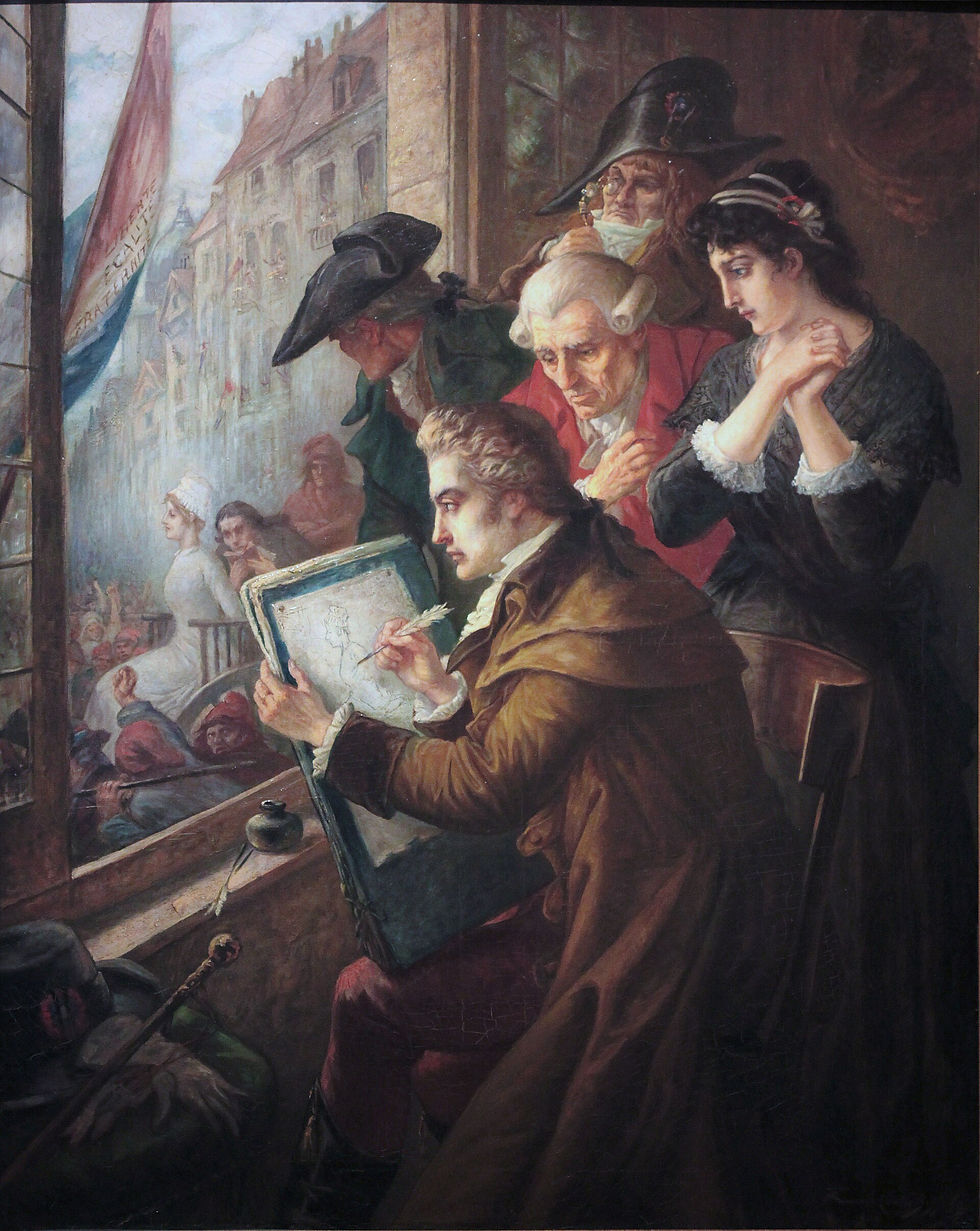
Rue Paul Devigne. Paul De Vigne (1843 to 1901) came from a family of Ghent artists. His father made the statue of Jacob van Artevelde in Ghent. He lived on rue du Progrès and spent his last years in Schaerbeek. The Royal Museums of Fine Arts hold 23 of his works, including portrait busts of fellow artists.

Rue Godefroid Devreese. Godefroid Devreese (1861 to 1941) lived in Schaerbeek for 55 years. He made the Monument des Bienfaiteurs and the Bacchanals Vase on avenue Louis Bertrand, a gift to the commune after the 1911 town hall fire. Fun fact: the Royal Museums of Fine Arts hold his portrait of Herbert Hoover, who also has an avenue in Schaerbeek.

Rue Frans Binjé. Frans Binjé (1835 to 1900) worked for the railways and painted landscapes and seascapes in his free time, mostly self-taught. He joined the painters of the Tervuren School and exhibited as far as Berlin and Paris. He died in Schaerbeek. Five of his works are in the Royal Museums of Fine Arts.

Rue Josse Impens. Josse Impens (1840 to 1905) painted cheerful inn and tavern scenes. He moved to Schaerbeek in 1893 and lived at four different addresses: rue Josaphat, rue de Brabant and twice on avenue Rogier. The commune named this street after him in 1909. His Flemish Tavern is in the Royal Museums of Fine Arts.

5. Meiser, Plasky and Diamant
Avenue and Square Eugène Plasky. Eugène Plasky (1851 to 1905) was a pupil of Antoine Wiertz and painted the Campine, the coast and the Schaerbeek of his day. He lived on rue du Progrès. In 1909, the commune named an avenue and a square after him. Today his name is used for a whole neighbourhood, so thousands of Schaerbeekois say "Plasky" every day.

Rue Léon Frédéric. Léon Frédéric (1856 to 1940) failed the Prix de Rome because his colours were "too personal" for the jury. He became famous for large, detailed paintings of country people. He died in Schaerbeek. The Royal Museums of Fine Arts hold 35 of his works, including the triptych The Chalk Sellers and The Ages of the Peasant. A bronze medallion of Frédéric by Jules Lagae once decorated his house-studio at chaussée de Haecht 232. When the house was demolished, it moved to a stone stele in Parc Josaphat (1972). Sadly, the medallion has since been stolen.

Avenue Adolphe Lacomblé. Adolphe Lacomblé (1821 to 1886) was both a landscape painter and a writer on art. From 1864, he was also city secretary of Brussels. Before it took his name, his avenue was called rue du Camée.
Place Wappers. Gustave Wappers (1803 to 1874) became the first painter to King Leopold I in 1832. His Episode of the September Days 1830, showing the Belgian Revolution on the Grand-Place, is a key painting of the young nation, in the Royal Museums of Fine Arts. The square lies on rue du Noyer.

Rue William Degouve de Nuncques. William Degouve de Nuncques (1867 to 1935) was born in the French Ardennes and became a master of Symbolist night scenes. The painter Henry de Groux used him as the model for the face of Christ in his Christ Mocked. The Royal Museums of Fine Arts hold 22 of his works.

Rue Henri Evenepoel. Henri Evenepoel (1872 to 1899) died at only 27, yet left more than 50 works now in the Royal Museums of Fine Arts, including Henriette with a Large Hat. His grandfather lived at 78 rue Dupont in Schaerbeek.

Avenue Frans Courtens. Frans Courtens (1854 to 1943) was nicknamed "the Rubens of landscape painting". As a young man in Brussels, he attended a free academy above a café called La Patte de Dindon. The Royal Museums of Fine Arts hold 13 of his works, including Undergrowth and Sunny Avenue.

Rue Camille Wollès. Camille Wollès (1864 to 1942), born in Saint-Josse, painted landscapes and exhibited with the Brussels circle L'Essor. His brother Lucien was also a painter. A canal view by him is in the Royal Museums of Fine Arts.

Rue Paul Leduc. Paul Leduc (1876 to 1943), from La Louvière, started out among the pupils of Joseph Coosemans in Tervuren. He painted the canals and bridges of Venice, the south of France and Algeria. He died in Schaerbeek. His View of Venice is in the Royal Museums of Fine Arts.

Rue Jul Merckaert. Jules Merckaert (1872 to 1924) was a true Schaerbeekois: born here, died here, and had his studio here. In 1898, he was one of the twelve founders of the artists' group Labeur. He painted street scenes and river views.

Take the walk
Pick one neighbourhood, look up at the blue street signs, and you will see Belgian art history differently. Then visit the Royal Museums of Fine Arts on rue de la Régence, or the Schaerbeek town hall, to meet the works behind the names.
Photo credits
All images from Wikimedia Commons. Paintings and historic photos are in the public domain unless stated. Specific credits: Capronnier window in Chailey, photo Antiquary, CC BY 4.0. Van Hammée portrait, photo Pierre van Win, CC BY-SA 3.0. Desenfans and Kessels sculptures, photos Yair Haklai, CC BY-SA 4.0. Vinçotte, Cinquantenaire arch, photo Ad Meskens, CC BY-SA 3.0. Henri Jacobs, Rodenbach school, photo EmDee, CC BY-SA 3.0. Lehon painting, photo JoJan, CC BY 3.0. Markelbach, Wappers and Jaquet: Rijksmuseum, CC0. Verwée, Donkey: private collection. Verboeckhoven, Les ânes schaerbeekois: Schaerbeek town hall, mayor's office. Massys painting, photo Ricardo Tulio Gandelman, CC BY 2.0. Frédéric painting: Museum of Fine Arts Ghent, CC0.
Sources
Inventaire du patrimoine architectural, Schaerbeek: introduction urbanistique (urban.brussels)
Commune de Schaerbeek, "Histoire de la collection" (1030.be)
Royal Museums of Fine Arts of Belgium, online collection (artist pages, consulted October 2026)
Wikipedia (FR), "Liste des voies de Schaerbeek" and articles on each artist
La Libre Belgique, "À Schaerbeek: noms d'artistes, noms de rues", 3 September 2001


Comments